Introduction
Drilling fluids, commonly known as drilling muds, play a critical role in oil and gas drilling operations. These fluids are essential for maintaining wellbore stability, controlling formation pressure, and ensuring efficient drilling performance. They act as the backbone of drilling activities by lubricating the drill bit, carrying rock cuttings to the surface, and preventing well collapse.
Drilling fluids are specially engineered mixtures of liquids, solids, and chemicals designed to assist the drilling process. Their main functions include cooling and lubricating the drill bit, transporting cuttings to the surface, maintaining hydrostatic pressure, stabilizing the wellbore, and preventing formation damage. A well-designed drilling fluid system ensures smooth drilling operations and improved efficiency.
Types of Drilling Fluids
Water-based mud is the most commonly used drilling fluid, where water acts as the primary base fluid mixed with clay, polymers, and additives such as bentonite and PAC (Polyanionic Cellulose). It is cost-effective, easy to formulate, and environmentally friendly compared to other fluid systems. Water-based mud provides good hole cleaning and is suitable for standard drilling conditions where formations are not highly reactive.
Oil-based mud uses oil as the base fluid, making it highly effective for complex drilling environments. It offers excellent thermal stability and superior lubrication, especially when used with drilling lubricants. OBM is widely used in high-pressure, high-temperature (HPHT) wells and challenging formations where water-based systems may fail. It also helps improve wellbore stability in reactive shale formations.
3. Synthetic-Based Mud (SBM)
Synthetic-based mud is engineered using synthetic chemicals to deliver high performance while maintaining better environmental compliance than oil-based mud. It provides improved drilling efficiency, enhanced lubrication, and reduced environmental impact. SBM is commonly used in offshore drilling operations and environmentally sensitive areas where strict regulations apply.
Importance of Drilling Fluids
Drilling fluids are essential for safe and efficient drilling operations. They help maintain wellbore stability, control pressure, and reduce operational risks. Without proper fluid design, drilling operations can face issues such as wellbore instability, equipment damage, increased non-productive time, and safety hazards. The right selection of drilling fluid ensures smooth operations and cost efficiency.
Conclusion
Understanding the different types of drilling fluids is crucial for selecting the most suitable system for specific drilling conditions. Whether it is water-based, oil-based, or synthetic-based mud, each type serves a unique purpose in ensuring successful drilling operations. Choosing the correct drilling fluid not only improves efficiency but also enhances safety and reduces overall operational costs.
Explore our range of drilling fluid chemicals designed to improve drilling efficiency and wellbore performance.
FAQs on Types of Drilling Fluids
What are the main types of drilling fluids?
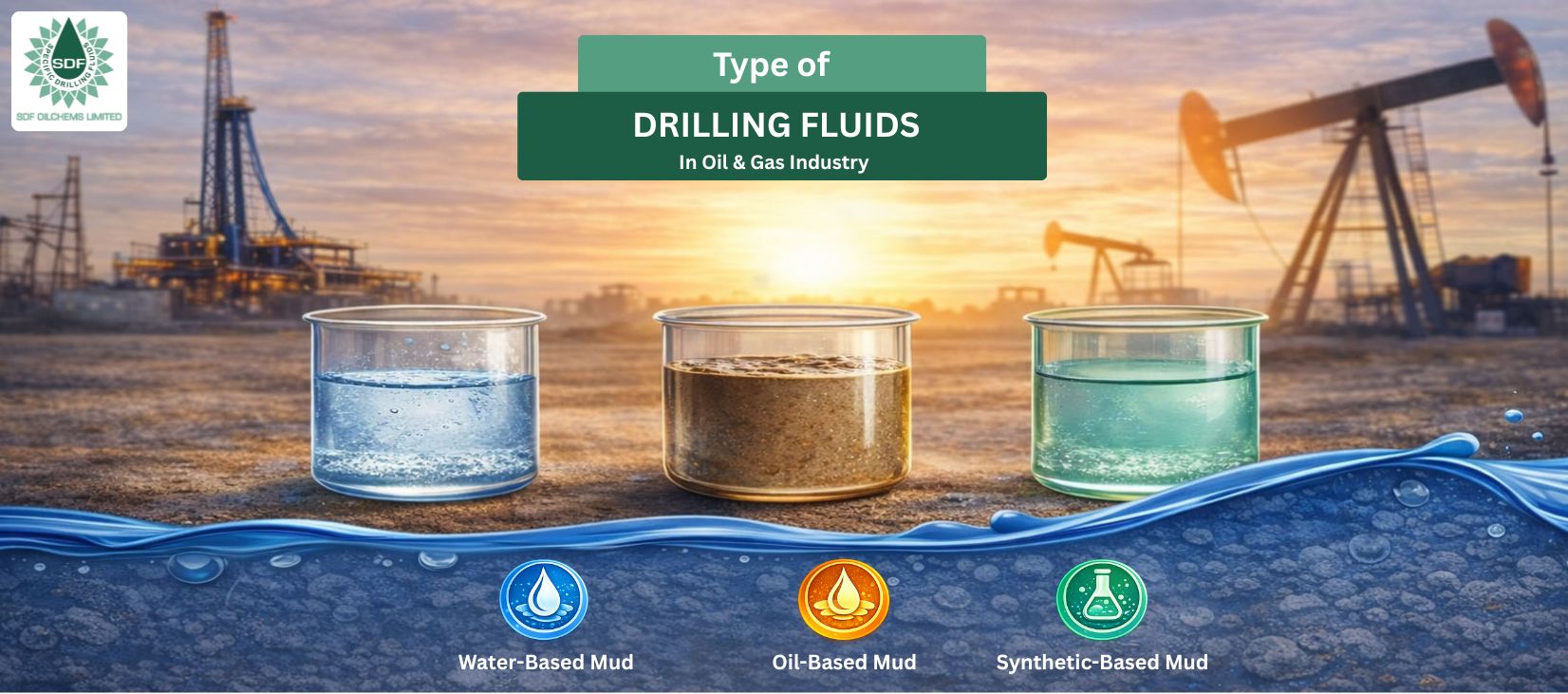
The main types of drilling fluids are water-based mud (WBM), oil-based mud (OBM), and synthetic-based mud (SBM), each designed for specific drilling conditions.
When is oil-based mud used?
Oil-based mud is used in complex drilling environments such as high-pressure, high-temperature wells and reactive formations where better stability and lubrication are required.
Why is water-based mud commonly used?
Water-based mud is cost-effective, environmentally friendly, and suitable for standard drilling operations where formations are stable.
What is the advantage of synthetic-based mud?
Synthetic-based mud offers high performance with reduced environmental impact, making it ideal for offshore and sensitive drilling areas.