Introduction
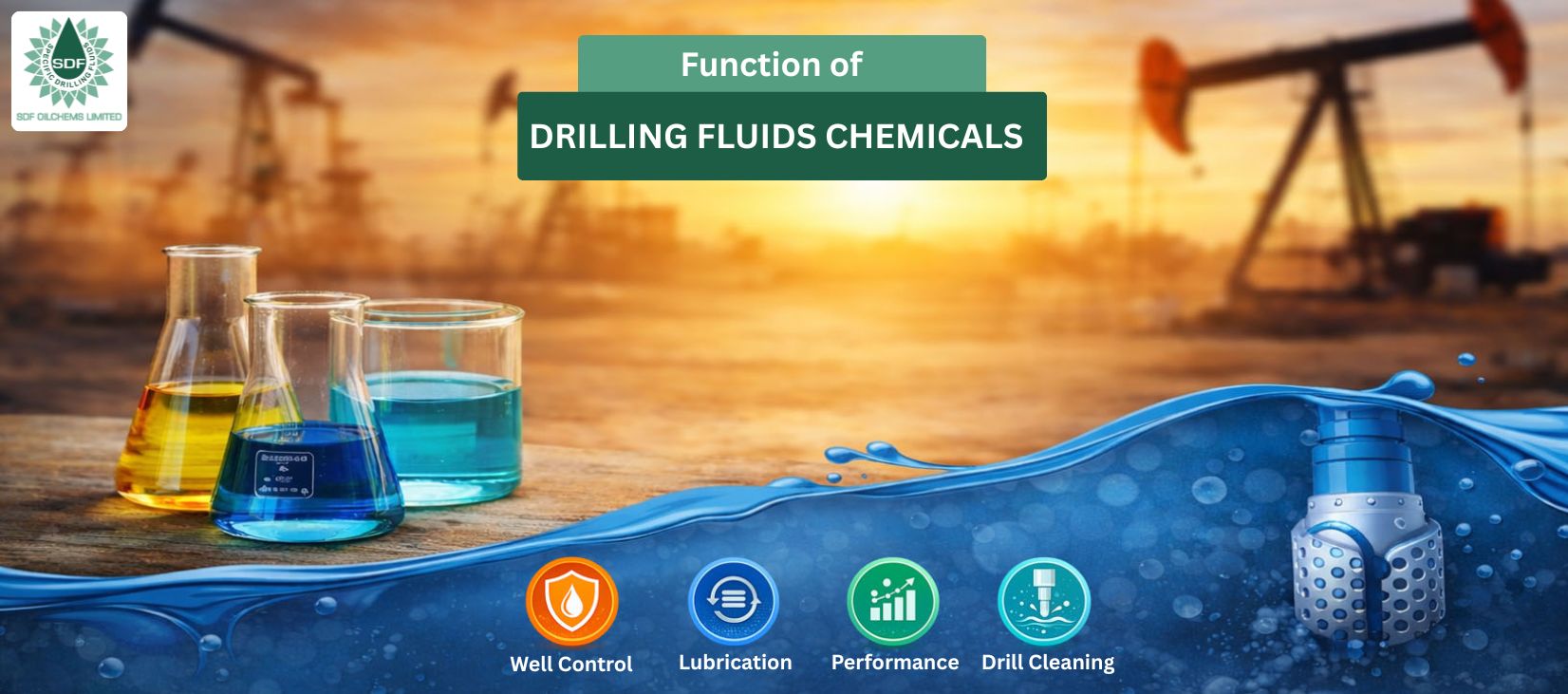
Drilling fluids play a vital role in ensuring safe, efficient, and cost-effective drilling operations in the oil and gas industry. These fluids are not just a medium for drilling; they are engineered systems designed to perform multiple functions such as cooling, lubrication, pressure control, and wellbore stabilization. Properly formulated drilling fluids significantly improve drilling performance and reduce operational risks.
Primary Functions of Drilling Fluids
1. Cooling and Lubrication
Drilling fluids help cool and lubricate the drill bit and drill string during drilling operations. Continuous circulation of fluid dissipates heat generated by friction and prevents overheating of equipment. Lubrication also reduces torque and drag using Water-Based Lubricant, improving drilling efficiency, especially in directional and horizontal wells. This function extends the lifespan of drilling tools and minimizes operational downtime.
2. Cuttings Transport
One of the most critical functions of drilling fluids is to transport drilled cuttings from the bottom of the well to the surface. The fluid carries these rock fragments efficiently, preventing their accumulation in the wellbore. Proper cuttings removal ensures smooth drilling progress, reduces chances of pipe sticking, and maintains hole cleanliness for better drilling performance.
3. Pressure Control
Drilling fluids are used to maintain hydrostatic pressure within the wellbore to control formation pressure. This prevents the influx of formation fluids such as oil, gas, or water into the well. Effective pressure control is essential for avoiding blowouts and ensuring safe drilling operations. Proper fluid density using barite plays a key role in maintaining well control.
4. Wellbore Stability
Drilling fluids help stabilize the walls of the wellbore by preventing collapse and minimizing formation damage. They create a thin filter cake on the wellbore walls, which supports the formation and reduces fluid invasion. This function is especially important in reactive shale formations where Polyamine shale Inhibitors are used.
5. Formation Protection
Drilling fluids are designed to protect the reservoir formation by minimizing fluid loss and preventing contamination. Controlled filtration helps maintain the natural properties of the formation, which is critical for future production. Proper fluid selection ensures minimal formation damage and enhances overall well productivity.
Conclusion
Understanding the key functions of drilling fluids is essential for selecting the right fluid system for different drilling conditions. A well-designed drilling fluid improves operational efficiency, enhances safety, reduces non-productive time (NPT), and ensures long-term well integrity.
Explore our range of drilling fluid chemicals designed to improve drilling efficiency and wellbore performance.
FAQs on Functions of Drilling Fluids
What are the main functions of drilling fluids?
Drilling fluids perform several critical functions including cooling and lubrication of the drill bit, transporting cuttings to the surface, maintaining pressure control, stabilizing the wellbore, and protecting the formation.
Why is cooling and lubrication important in drilling?
Cooling and lubrication help reduce friction and heat generated during drilling operations. This prevents equipment damage, improves drilling efficiency, and extends the life of the drill bit and drill string.
How do drilling fluids help in pressure control?
Drilling fluids maintain hydrostatic pressure in the wellbore, preventing the entry of formation fluids such as oil or gas. This helps avoid blowouts and ensures safe drilling operations.
What role do drilling fluids play in wellbore stability?
Drilling fluids support the wellbore walls by forming a protective filter cake and preventing collapse. This is especially important in unstable or shale formations.
How do drilling fluids protect the formation?
They minimize fluid loss and prevent contamination of the reservoir. This helps preserve the natural properties of the formation and improves future production performance.