Introduction
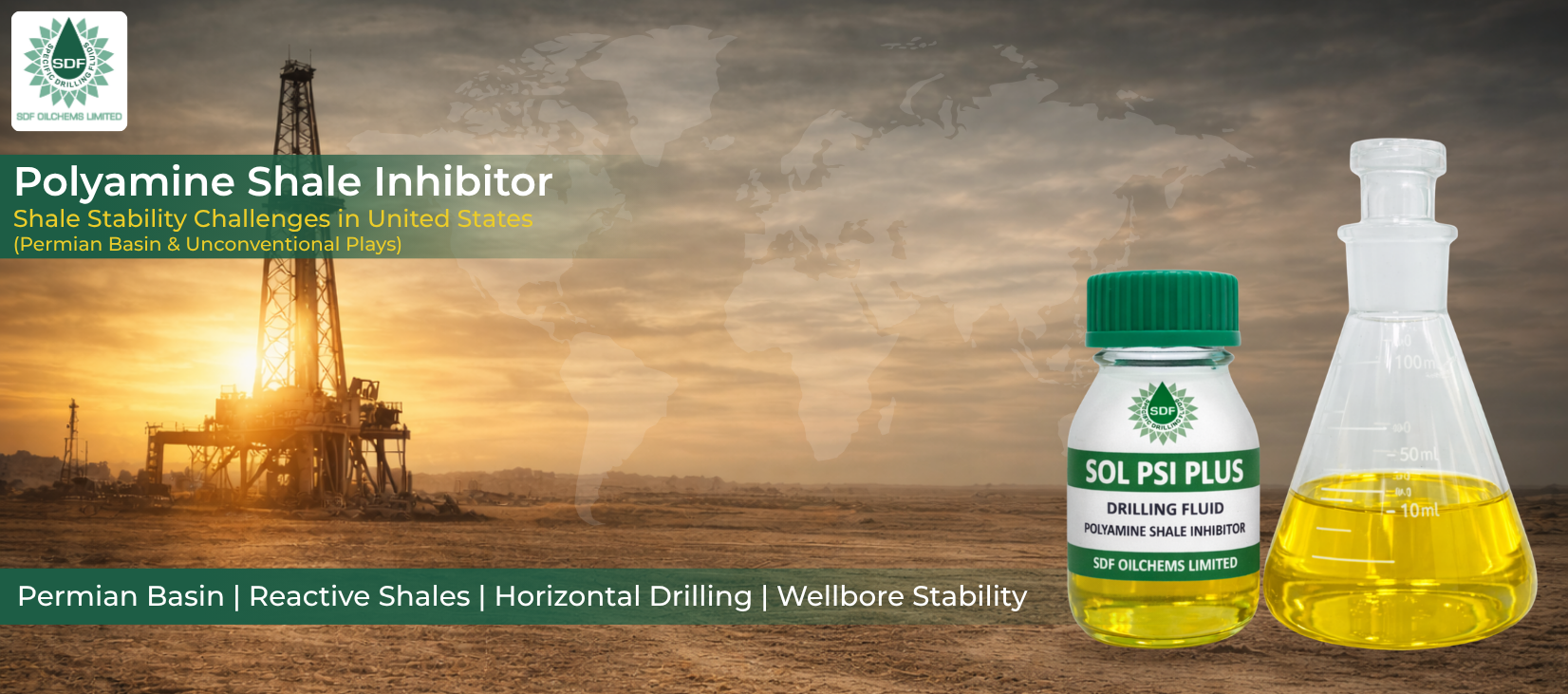
The demand for efficient shale inhibition solutions in the United States has increased significantly with the rapid expansion of unconventional drilling. In regions like the Permian Basin, maintaining wellbore stability is one of the most critical challenges faced by drilling engineers.
Reactive shale formations, extended horizontal drilling, and water-based mud systems create conditions where shale swelling, dispersion, and instability can severely impact drilling performance.
A polyamine shale inhibitor in the USA has become a preferred solution to address these challenges, offering strong chemical inhibition and consistent performance across complex shale formations.
Shale Stability Challenges in the Permian Basin
The Permian Basin is one of the most active oil and gas regions globally, but it presents significant shale-related drilling challenges:
• Highly reactive clay minerals (especially smectite)
• Long horizontal well sections (often exceeding 10,000 ft)
• Continuous exposure of shale to water-based fluids
• Multi-layered formations with varying reactivity
• High drilling speeds increasing shale-fluid interaction
These conditions lead to:
• Shale swelling and hydration
• Cuttings dispersion and poor hole cleaning
• Wellbore instability in lateral sections
• Increased torque and drag
• Higher risk of stuck pipe incidents
Without effective inhibition, these issues directly increase non-productive time (NPT) and operational costs.
Why Polyamine Shale Inhibitors Are Used in the USA
Traditional shale inhibitors such as KCl and PHPA often fail to deliver consistent performance in highly reactive and extended-reach wells.
A polyamine shale inhibitor in the USA is widely used because it provides:
• Strong chemical interaction with clay surfaces
• Effective performance in long horizontal wells
• Compatibility with modern water-based mud systems
• Stability across varying drilling conditions
This makes polyamine systems particularly suitable for unconventional plays like the Permian Basin.
Mechanism of Polyamine Shale Inhibitor
Polyamine inhibitors function through multiple mechanisms that directly target shale reactivity:
1. Clay Surface Adsorption
Polyamine molecules attach to negatively charged clay surfaces, neutralizing their reactivity and forming a protective barrier.
2. Reduction of Water Ingress
They limit the entry of water into clay layers, preventing swelling and expansion.
3. Cuttings Stabilization
Polyamines help maintain the integrity of drilled cuttings, reducing dispersion into fine particles.
4. Improved Wellbore Integrity
By stabilizing shale formations, they prevent sloughing and collapse in lateral sections.
Application in U.S. Unconventional Plays
Polyamine shale inhibitors are extensively used across major U.S. basins, including:
- Permian Basin
- Eagle Ford Shale
- Bakken Formation
- Marcellus Shale
Typical applications include:
• Water-based mud systems
• Horizontal and extended reach wells
• High ROP drilling programs
• Reactive shale formations
Advantages Over Conventional Shale Inhibitors
Compared to KCl
• More effective in highly reactive clays
• Lower concentration required
• Reduced environmental impact
Compared to PHPA
• Better chemical inhibition (not just encapsulation)
• More stable under high shear conditions
• Improved performance in long laterals
Compared to Glycol Systems
• Consistent performance across temperature variations
• Less dependency on thermal activation
• Stronger interaction with clay structures
Operational Benefits in U.S. Drilling
Using a polyamine shale inhibitor in the USA results in:
• Improved wellbore stability in horizontal sections
• Reduced non-productive time (NPT)
• Lower torque and drag
• Enhanced rate of penetration (ROP)
• Better hole cleaning efficiency
• Reduced risk of stuck pipe
These benefits directly contribute to cost optimization and improved drilling performance.
Performance in Water-Based Mud Systems
Water-based mud (WBM) systems are widely used in U.S. unconventional drilling due to cost and environmental considerations.
Polyamine systems perform effectively in WBM by:
• Providing strong shale inhibition without heavy salt loading
• Maintaining fluid stability across varying water chemistries
• Supporting cleaner drilling operations
This makes them a reliable solution for modern drilling fluid design.
Best Practices for Implementation
To achieve optimal results:
• Select polyamine concentration based on shale reactivity
• Combine with compatible polymers for enhanced performance
• Monitor mud properties regularly
• Adjust formulation based on drilling depth and conditions
• Ensure proper solids control to maintain fluid quality
Explore More on Polyamine Shale Inhibitors
For performance insights in high-temperature drilling environments, you can also read our detailed article:
Polyamine shale inhibitor performance in high-temperature Saudi wells
This provides additional understanding of how polyamine systems perform under extreme thermal conditions.
Conclusion
Shale stability remains a critical challenge in U.S. unconventional drilling, particularly in the Permian Basin where reactive formations and extended horizontal wells increase operational risks.
A polyamine shale inhibitor in the USA offers a reliable and efficient solution by delivering strong clay inhibition, improved wellbore stability, and consistent performance across varying drilling conditions.
Its application is essential for optimizing drilling efficiency, reducing operational risks, and ensuring successful well delivery in modern unconventional plays.